Thursday, October 16, 2014

Public Transportation and Sex Appeal

I'm kidding about the sex appeal bit, sort of.  But we'll get to that in a moment...

Let's Talk about Public Transit, Baby...

I know I talk about public transportation a lot.  It likely stems partially from the fact that I don't own a car.  And from the fact that I hate driving.  And from the fact that it's (usually) faster than biking. 

Historically, there was very much a 'build it and they will come' mentality with public transportation.  People learned to use and love public transportation because it was there.  Now, this was partially because cars were relatively new, and infrastructure such as highways that made car travel convenient were only just being built.  For example, consider this:  according to the American Public Transportation Association, the highest recorded ridership in any year was 1946, with 23.5 billion rides that year.  (That's a lot of people using public transit.)

Just after that point, the United States came home from WWII, and car ownership expanded widely.  This was along with the passage of the Federal Highway Act in 1956 that led to the construction of many of today's modern interstates and highways.

Also, there were beautiful cars like this:

So the people started driving.  And so what happened to public transportation in all this?  The main problem:  it's just not sexy.

There are a lot of undesirable things about waiting around to stuff yourself into a wheeled, metal tube of a vehicle with dozens of other just to go somewhere. 


But from my previous blog posts, you can see why public transportation is good, and why it is important for communities to have this service to offer to citizens. 

So then, what's the problem?

Sex Appeal of Public Transportation

Getting Creative

This is the problem that many public transportation agencies around the country are grappling with.  How to make public transportation seem as awesome as it really is.  Over the past couple decades, public transportation has come a long way in many places toward becoming a legitimate alternative to driving, with the use of technology to create better routes that run longer and more on time.  So then the answer to the problem? Mike LeJune, the creative director of the Los Angeles Metropolitan Transportation Authority has a strategy.  That's right:  creative director.  And in truth, it's all a branding problem. (You can read a prettier article, here.)

People don't want to ride the subway, or the bus.  They want to ride BART, or the Metro, or MAX (here in Fort Collins). 

Look at this.  It's like a sexy centerfold photo for a magazine.

Advertising is Squishy

Now this is all easier said than done.  It is difficult to prove that advertising and branding has any effect on increasing ridership in public transportation, and where there isn't proof, there is rarely tax dollars to support it. 

Furthermore, it veers into the fuzzy area of economics, where the value of advertisement and branding is often tied up in the true value of a good/service.  However, with public goods like public transportation, estimating the true value of things is nearly impossible.

But it is a thought.

And with that, I will leave you with a few examples of some weird, but oddly catchy commercials for transit systems around the country.  Enjoy:
  • A commercial for extended nighttime service for Coast Public Transit in Mississippi:  here
  • A fun little slow-and-steady-wins-the-race advertisement:  here
  • My personal favorite, an advertisement for the Silver Line around Washington DC: here

Thursday, October 9, 2014

Food Waste and Hairnets (The Latest Fall Accessory)

I work in a dining hall.  That generally means that I spend 20-some hours a week wielding a spatula and trying to make a hair net look sexy (it doesn't).


But another thing I do?  I waste a lot of food -- all in the name of food safety.  For example, any food that is 'self-serve' (a.k.a., where you put the food on your own plate, such as at a salad bar) has to be thrown away at the end of the night due to cross-contamination concerns.  And that adds up to a lot of food every night.

Now, thankfully, my place of employment openly embraces a lot of sustainable practices, which means that we try to compost and donate what we can.  But it is still an imperfect system.

But before I get too far into this, I want to add some context to this whole issue.  With that, I introduce to you the concept of food waste.

Food Waste


Food Waste is the phenomenon of throwing food away that doesn't need to be.  This takes several forms:
  • Throwing away fruits and veggies in your kitchen that went bad before you got a chance to use them.
  • Throwing away food that was left on your plate at the end of a meal.
  • Throwing food away at the end of the night at restaurants because of food safety regulations.
 But what it boils down to?  Throwing food away.

And as a society, it is something we are pretty good at.  As a nation, we wasted 36 million tons of food alone in 2012.  That's a lot of food that simply ended up in landfills.  And why?

Why Food Waste?

In short, people's eyes are bigger than their stomachs.  And we're lazy.  We have become accustomed to the vision of a full refrigerator in our kitchen.  And this, combined with our dislike of going to the grocery store more frequently to buy smaller quantities of food, is the greatest cause of the issue at hand.


Why It's Really Bad

But the mere waste of food isn't the worst part.  Many of the environmental consequences of food waste is the reason it is problematic.  These consequences include:
  • Contributing to Resource Use - this is a fancy way of saying that our over-demand for food contributes to a subsequent over-production of agricultural food products.  In this, we grow too much corn, and raise too much cattle relative to our actual needs.  And because of this, we use more water, land, and soil than is necessary.
  • Methane - one of the greatest problems of decomposing food is the production of methane gas, which is, coincidentally, a leading greenhouse gas that has been linked with climate change.  
    • Also, on a related note, our demand for cattle also causes more methane to be released into the atmosphere because of, well, cow farts.  (Also, this is a thing.)
  • Sanitation - food waste also contributes to poorer sanitary conditions as food waste is disposed of in dumpsters behind homes and business.  This works to attract mice and other pests.  (Yuck.)
  • There are Starving Kids in Africa - Yes, there are starving kids in Africa.  But there are also starving kids (and people) in our own communities who could benefit from the food we produce.  But instead, we throw it away.  And that just sucks.

So How do We Fix It?


 Unfortunately, America's relationship with food very likely isn't going anywhere any time soon.  We like food, and America's agricultural industries enjoy a paycheck.  Within that, though, there are ways to mitigate food waste.  Here are a few solutions suggested by the EPA:

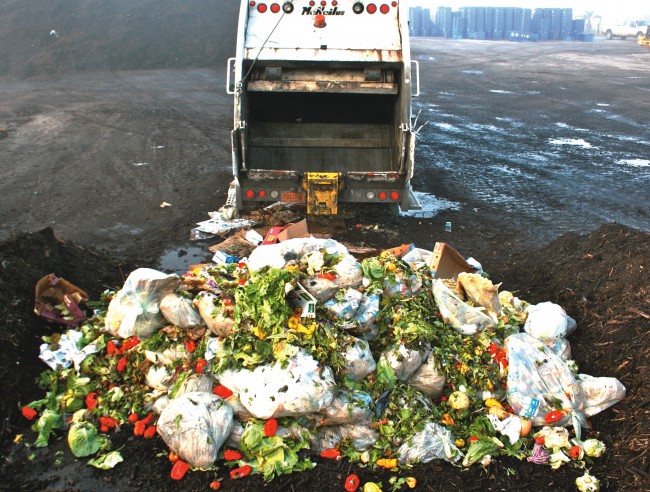
Composting

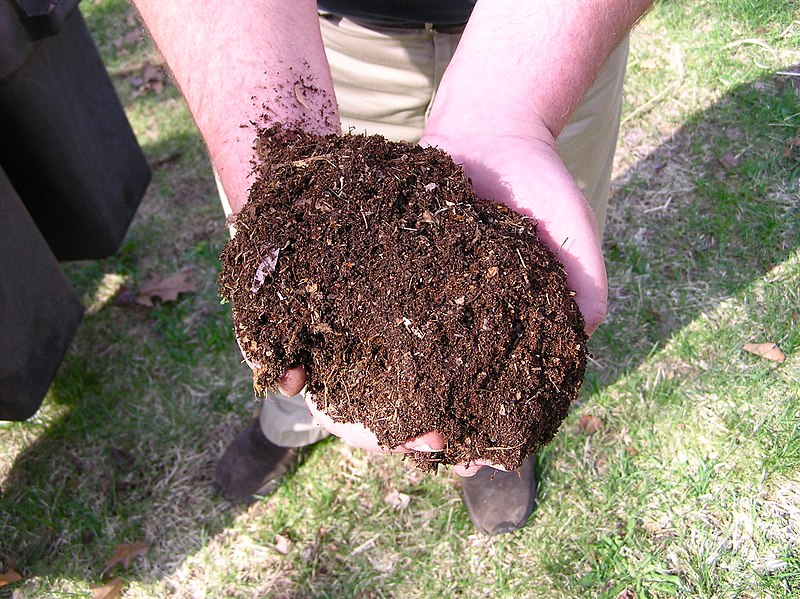
Composting, or systematically allowing food to decompose into usable and nutrative soil, has several benefits.  First, it allows us a place to divert some of the food waste we produce.  Also, the use of compost soil can naturally work to replace some of the nutrients in soil that are removed by agriculture.  Last, composting is relatively inexpensive.

Food Donation

Often times, a lot of the food we throw away is fresh enough that it could be donated to local food shelters and banks to provide food to people in our communities who can't afford it.  This can be complicated due to legal limitations and the process of transporting food to food shelters, but it is a very possible way to divert usable food away from landfills.

Industrial Uses

This is a rather broad use for food waste, but it essentially speaks to finding ways to use food waste in industrial settings, thus diverting the waste away from landfills.  Some options include:
  • Using food waste as a biomass source for energy production.  This is an innovative option that some corporations, such as Kroger, uses to power some of their stores.
  • Using food waste as feed for animals.  This is especially relevant as an option within the agricultural industry.
  • Using grease and fats as fuel.
 As always, none of these are a silver bullet-esque solution to fixing the problem.  The true problem is embedded in society.  But there are ways we can try to help.

And although I feel horrible about how much food I tend to waste at my job, some of the things Colorado State University does to be more sustainable is pretty cool.  A video in close.

Thursday, October 2, 2014

Growing Up and Growing Out

What Do You Want to Be When You Grow Up?

 I swear this question will become relevant in a few minutes.

My answer to this question has changed over the years.  I wanted to be a ballerina when I was little, followed by a teacher, and a CSI, and a computer person, and a journalist when I was in high school.  (I was something of a strange child.)  Somewhere in there, I decided I was interested in politics.

So out of this mess I ended up as a Political Science major as I entered college, and eventually I found myself attracted to Economics much the same way a moth is attracted to a light bulb.  And I love them both.

And while I refuse to believe that I'm actually grown up, from that I've settled on something else entirely:  urban planning.  I can now say that that is what I want to do when I 'grow up' (whatever that means). 

Now, my inner struggle of growing up isn't particularly germane to the environment, but urban planning is.

Urban Planning and Sustainability

Urban Sprawl (*insert dramatic scream*)

In a lot of modern urban planning practices, this image is tantamount to a movie poster for a horror film: 


 No, it's not a germ-y, bacterial blob.  Those are houses.  And this is an image of urban sprawl. 

Merrian-Webster defines urban sprawl as:
"A situation in which large stores, groups of houses, etc., are built in an area around a city that formerly had few people living in it."
 Now that sounds like the plot for a really (really) bad horror film.  But this type of building has several real consequences:
  • People drive more - one direct consequence of urban sprawl is that everything is more spread out.  Grocery stores are farther away from where people live, as are jobs, schools, and everything else people need to survive.  This spatial spread between all of these things typically means that people are unable to walk or use any alternative transportation to go about their daily lives; even if they wanted to.  This necessitates that people drive.  This leads to greater use of natural resources, and greater harmful tailpipe emissions that are bad for the environment.  Basically, it sucks.
  • People in the inner city have unequal access to jobs - as people move away from the inner city into sprawling suburbs and subdivisions, many of the jobs that were once located in the inner city move with the people.  This causes higher rates of unemployment among those who are unable to afford to move closer to areas of unemployment.  This distance further causes them to stay unemployed.
  • Uses an unnecessary amount of land - as people move outward into less densely-populated areas, they use an unnecessarily high amount of land to live on.  Which is sort of inefficient.

These are only several of the consequences.

But in swoops an Urban Planners' modern solution to this problem:  smart growth.

Smart Growth

Smart Growth is a concept often used by modern urban planners to try to curb the dastardly villain known as urban sprawl.  It is generally described by Smart Growth America as:
"Smart growth means building urban, suburban and rural communities with housing and transportation choices near jobs, shops and schools. This approach supports local economies and protects the environment."

How Does Smart Growth Work? / Areas of Sustainability


 Generally, Smart Growth works because it focuses on three areas that comprise this behemoth idea of 'sustainability.'  These are the areas:

Environmental Sustainability

Environmental sustainability is what people traditionally think of when they hear the 'sustainability' buzzword.  It is the traditional idea that all natural resources are precious and finite.  In the face of the degradation of these resources, and with increasing populations, it is the realization that we must be smarter about how we use natural resources.  It is the idea that less may need to be more.

Economic Sustainability

Economic sustainability is the concept of nurturing economies that help allocate resources among people somewhat fairly, while also doing so in a way that considers the environment and social equality.

Social Sustainability

Social sustainability is creating systems that are both environmentally and economically sustainable, while fostering culture that allows for a basic standard of living for all people.

 What Does That Mean?

It means that smart growth is using sustainable practices and land use planning to make better cities.  This approach moves away from economic rationality that pits individual freedom to own a house with a yard against the reality that all natural resources - land, clean air, and the environment in general - are finite.  It focuses more densely-populated areas, and on the placement of jobs and services near the areas where people live.  So they can walk, or take the bus, or ride a bike. 

And this access to cheaper transportation means that everyone has access to these services - not just people who can afford to have cars.

Which solves several of the problems that cause urban sprawl.

That All Sounds Nice...

...But does it really work?

And the answer is:  sort of.  This is merely a tool and concept used by urban planners to attempt to nudge cities in the right direction toward efficiency and sustainability.  But the reality of the urban planning field is that they can set the stage for all of these things to happen using both land use and zoning regulations.  But they typically aren't the one building new housing and businesses. 

Furthermore, even as the stage is set for this to occur, it takes time for the dreams of smart growth to be a reality. 

For the same reason that Rome wasn't built in a day.